Wednesday, 5 April 2017

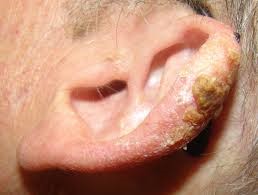
Cholesteaotoma | PGI May 2017 Preparations MCQ


True about cholesteaotoma is/are 

A. It is a benign tumour 
B. Metastasize to lymphnode 
C. Contains cholesterol 
D. Erodes the bone 
E. Malignant potential


Ans. (D) Erodes the bone
• Theterm cholesteatoma is a misnomer, becasue it neither contains cholesterol crystals nor is it a tumor. This is a sac or a pocket in the middle car cleft lined by keratinised squamus epithelium and contains desquamated concentric sheets of keratin.
• Mechanism of its formation : (a) By retraction pocket formation and (b) by immigration of squamous epithelium from deeper part of the canal usually through a marginal perforation.
• The cholesteatoma sac may undergo following pathological changes
— Spontaneous healing
— Secondary infection
— The granulation tissue on the outside of the sac produces lysozymes and this gradually erodes the ossicles, eardrum, and mastoid bone.
• The nature of cholesteatoma is usually benign and does not have any malignant potential nor it metastasizes. 

Nerve supply of tympanic membrane | PGI May 2017 Preparations MCQ


Nerve supply of tympanic membrane 

A. Auriculotemporal NV 
B. Auricular br. of vagus 
C. Occipital NV 
D. Great auricular NV 
E. Glossopharyngeal NV


Ans. (A)  Auriculotemporal ; (B) Auricular branch of vagus; (E) Glassopharyngeal N
• Onthe outer surface of tympanic membrane, the anteroinferior part is supplied by the auriculotemporal nerve, and the posterosuperior part by the auricular branch of the vagus nerve.
• On the inner surface, it is supplied by the tympanic branch of the glassopharyngeal nerve through tympanic plexus.
• The auricle and external meatus are supplied by branches of the Vth, IXth and Xth cranial nerves. The medial or posterior surface of the auricle is supplied by fibres of the great auricular nerve (C2 and C3) and the lesser occipital nerve (C2).
 

Vestibular function | PGI May 2017 Preparations MCQ


Vestibular function is tested by 

A. Galvanic stimulation 
B. Acoustic reflex 
C. Fistula test 
D. Impedance audiometry 
E. Cold caloric test


Ans. (A) Galvanic test ; (C) Fistula test ; (E) Cold caloric test
• Fistula test: is done by pressing the tragus and alternately relasing it or by compression of air by Siegle’s speculum. Positive test is indicated by vertigo and nystagmus and signifies presence of fistulous communication between middle ear and labyrinth. Negative test signifies absence of fistula and fastula with dead labyrinth.
• Galvanic test is the only vestibular test which helps in differentiating an end organ lesion from that of vestibular nerve.
• Impedence Audiometryprovides a quick objective resistance measurement of tympanic membrane and middle ear and their compliance to sound pressure transmission.
• Acoustic reflex: is based on the fact that a loud sound, 70-100 dB above the threshold of hearing of a particular ear, causes bilateral contraction of the stapedial muscles which can be detected by tyrnpanometry. It is an objective test for
— Rough estimation of hearing ability
— Detection of non-organic hearing loss (Malitigerers)
— Demonstration of recruitment
— Localization of lesion of the facial nerve
— Assessment of hearing in neonates and children

Monday, 3 April 2017

Drugs is not used for H. pylori treatment | Crack AIIMS, NEET 2017 with NIME MCQs

Which of the following drugs is not used for H. pylori treatment? 

A. Oxytetracycline 
B. Bismuth compounds 
C. Amoxicillin 
D. Omeprazole

Ans. D. 
• Omeprazole is not an anti H. Pylori drug

Drugs used against H. Pylori are
• Amoxicillin
• Clarithromycin
• Tetracycline
• Metronidazole /Tinidazole
• Bismuth subsalicylate
Monotherapy has failed in treatment of H. Pylori infections. Hence, multidrug regimens given for 7-14 days are generally used. 


Antibiotic acts by inhibiting cell wall synthesis | Crack AIIMS, NEET 2017 with NIME MCQs


Which antibiotic acts by inhibiting cell wall synthesis? 

A. Erythromycin 
B. Tetracycline 
C. Lomefloxacin 
D. Cefepime

Ans. D. Cefepime
Antibiotics inhibiting cell wall synthesis: Penicillins, cephalosporins, Cycloserine, Vancomycin, Bacitracin,
Imipenen, Aztreonam.
Inhibiting protein synthesis;
Acting on 50S RNA - chloramphenicol, clindamycin, Erythromycin
Acting on 30S RNA - Tetracycline, Aminoglycosides
Puromycin is a tRNA analogue which inhibits translaton in eukaryotic cell.
Alteration in cell membrane function: Polymyxin, Colistin, Bacitracin.
Amphotericin B, Nystatin,
Interfere with DNA function - Rifampicin,
 

Differential diagnosis of Simple bone cyst | PGI May 2017 Preparations MCQ


ASD is seen in a/e :

A. Turners synd. 
B. Ellisvan crevald synd. 
C. Down’s synd. 
D. Halt-oram synd. 
E. TAR synd

Ans. (A) Turner’s synd. : 

In the following syndrome, ASD seen-
- Syndrome Cardiovascular manifestation
- ELLIS-Van Creveld Syndrome >Single osteum or atrial septal defect
- TAR Syndrome: ASD, TOF
- Holt-oram syndrome- ASD
- Downs syndrome- ASD, VSD 

SSPE (subacute sclerosing panencephalitis) | PGI May 2017 Preparations MCQ


Differential diagnosis of Simple bone cyst are:

A. Giant cell tumour 
B. Non ossifying fibroma 
C. Dermtofibroma
D. Fibrous dysplasia 
E. Eosinophilic granuloma.

Ans. (A) Giant cell tumour; (B) Non-ossifying fibroma ; (D) Fibrous dysplasia; (E) Eosinophillic granulonia
• D/D of simple solitary bone cyst
-GCT
- Aneurysmal bone cyst
- Fibrous dysplasia
- Eosinophillic granuloma


Branchiolitis in children | PGI May 2017 Preparations MCQ


Which of the following is/are true about branchiolitis in children?

A. Caused by respiratory syncytial virus 
B. Hyperinflation of the chest 
C. Pleural effusion 
D. May lead to bronchial asthma later in life 
E. Lymphopenia is seen


Ans. (A) Caused by respiratory syncytial virus ; (B) Hyperinflation of the chest
(D) May lead to bronchial asthma later in life 


Bronchiolitis is most commonly caused by Respiratory syncytial virus.
• Chest X-ray shows hyperinflation and infiltrates, diaphragm is pushed down.
• The relationship of acute bronchiolitis to bronchial asthma in later life has been observed in about one-fourth of the cases of acute bronchiolitis. Bronchial asthma is more likely with personal or family history of an allergic illness.
leukocyte countis normal or slightly e1evated.


8 yr. old boy with undescended testis | PGI May 2017 Preparations MCQ


8 yr. old boy with undescended testis, your concern to ask for operation is due to 


A. Cosmetic reasons 
B. Infertility 
C. Risk of malignancy 
D. Impotence
E. Abdominal pain


Ans. (B) Infertility ; (C) Risk of malignancy
• Early orchidopexy reduces the risk of primary germ cell tumours of testis 
There is no reliable statistics as to whether orchidopexy diminishes the liability of malignancy. However.it does improve the prospect of early diagnosis. [LB 24th-1404]
• Orchidopexy decreases the risk of neoplasia when performed before 10 years of age. 
• The definite histological changes occur in an undescended testis by age of 6 yrs.


• Orchidopexy should be done before child goes to school 5 yrs. of age.
After 16 years, irrevesible, destructive changes occur, halt, the spermtogenesis, limit the androgen production to half the normal output. After 6 years, the percentage of successful operation falls in undescended testis. 
— By the age of five years, both the testes should be in the scrotum. After that age the germinal epithelium is increasingly at risk, and lack of descent by puberty is associated with infertility. Therefore orchidopexy before puberty may prevent infertility. 
Considering the above points, it is better to do orchidopexy for reasons 
— Risk of malignancy and Infertility 

Saturday, 1 April 2017

Osteogenesis imperfecta | PGI May 2017 Preparations MCQ


True about osteogenesis imperfecta 

A. Autosomal dominant 
B. Known as marble bone disease 
C. Blue sclera.
D. Associated with otosclerosis 
E. Defect in collagen I


Ans. (A) Autosomal dominant ; (C) Blue Sclera ; (D) Associated with Otosc1erosis(E) Defect in collagen-I
• Features of osteogenesis Imperfecta 
- Autosomal dominant. 
- Progressivehearing loss, osteosclerosis & positive family history.


- Defect in type I Collagen. 
- Multiple fracture/Skeletal fragility 
- A/W Blue Sclera, dental abnormality. 
• Osteopetrosis is also known as Marble bone disease.


True about cadaveric spasm | PGI May 2017 Preparations MCQ


True about cadaveric spasm :

A. Develops immediately after death 
B. May develop hours after death 
C. Develops only in facial muscles 
D. Involves individual/small group of muscles
E. Whole body is never affected.


Ans. (A) Develops immediately after death; (D) Involves individual/small group of muscles :
Cadaveric spasm is the stiffening ofmuscles immediately after death without being preceded by a stage of primary’ relaxation. Itcommonly involves groups of muscles such as forearmand hands. Butin some cases, when there has beenextreme nervous tension, the whole bodymay be affected. 
Rigor Mortis develop hours (2-3) after death, involve both voluntary and involuntory muscles, occur in all deaths, muscle contraction is less marked andonlymoderate force required to break it. 

Wednesday, 29 March 2017

Immuno suppressants | Crack AIIMS, NEET 2017 with NIME MCQs


All are true for immuno suppressants except: 

A. Sirolimus acts by I cell modification 
B. Tacrolimus inhibits calcineuiin pathway 
C. Mycophenolate acts by inhibiting GMP dehydrogenase 
D. Cyclosporin is integral in transplant rejection regimen.


Ans. C.
Mycophenolate is a prodrug of mycophenolic acid which selectively inhibits inosine monophosphate dehydrogenase thus inhibiting lymphocyte proliferation, antibody production and cell mediated immunity. Available in oral &iv forms. 
• Newer applications are lupus nephritis, RA & some skin conditions. 
Cyclosporin:
Mech. of Action: enters target cells and binds to a protein cyclophilin forming a complex which inactivates calcineurin -1 gene transcription of IL-2/3, INF-alpha) Response of T helper cells to antigenic stimulation fails 
• Selectively increases cell mediated immunity 
• S/E: Nephrotoxicity, increase in BP, Hyperkalemia Hepatotoxicty, pecipitation of OMHirsuitism, gum hyperplasia, tremors 
Uses: 
i. Prevents graft rejection (most effective drug for it) 
ii. Autoimmune diseases (RA, 180 etc) 
iii. Psoriasis 
iv. Aplastic anemia 

Leukotriene receptor antoagonist | Crack AIIMS, NEET 2017 with NIME MCQs


Which of the following acts as a leukotriene receptor antoagonist? 

A. Zafirlukast 
B. Zileuton 
C. Cromoglycan sodium 
D. Deriphylline


Ans. A. 
The lukasts (Zafirlukast/Montelukast) competitively antagonize cys LT1 receptor mediated bronchoconstriction, increased vascular permeability and recruitment of eosinophilis. 
• Used for mild to moderate asthma 
• Headache, rashes, eosinophilia, neuropathy 
Zileuton: S-LOX inhibitor 
• Short duration of action and hepatotoxic potential limit it’s use. 


Filgrastrim | Crack AIIMS, NEET 2017 with NIME MCQs


Filgrastrim is used for: 

A. Neutropenia 
B. anemia 
C. polycythemia
D. Neutrophilia

Ans. A.
• Filgrastrim is recombinant human G-CSF (rHuG-CSE used to mitigate the adverse effects of anticancer drugs. 
- It is a nonglycosylated peptide of 175 aminoacids. 
• rHuGM-CSF has also been developed - called sargramostim. 
• SargramoStim is partly glycosylated peptide of amino acids. 
• Pegfilgrastrim (Pegylated filgrastrim) has much longer half life than filgrastrim and can be used once per chemotherapy cycle. 
Action


• Action mediated via JAKIST AT pathway 
• GM-CSF has broader biological actions than G 
CSF. It affects early & late granulocYtiC progenitor cells, erythroid and megakarYOcY progenitors. 
• GM-CSF also stimulates T cell proliferation (together with IL-2) and causes mobilization of peripheral blood stem cells (this property has therapeutic significance) GCSF>GMCSF. 
Toxicity: 
• G-CSF is better tolerated 
• G-CSF can cause bone pain (reversible on discontinuation) 
• GMCSF cart lead to - fever, malaise, arthratgiaS, myalgias and a capillary leak syndrome (characterized by pleurallpericardial effusions and peripheral edema) 
• Splenic rupture occurs rarely with G-CSF. 


Antiepileptic does not act via sodium channel blockade | Crack AIIMS, NEET 2017 with NIME MCQs


Which antiepileptic does not act via sodium channel blockade? 

A. Vigabatrin 
B. Carbamazepine 
C. Lamotrigine 
D. Phenytoin


Ans. A.
Vigabatrin (y vinyl GABA) - is all inhibitor of GABA 
- transaminase, hence decreases breakdown of GABA and increases its concentration in synaptic cleft. 
• Useful in refractory epilepsy esp partial seizures with/without generalization 
S/E: Behavior changes, depression, psychosis. 
Carbamazepine: Prolongation of sodium channel inactivation 
Lamotrigine: Prolongation of sodium channel inactivation; in addition it may directly block voltage sensitive Na+ channels. 
S/E: Sleepiness, dizziness, diplopia, ataxia, Rash. Phenytoin: Prolongation of sodium channel inactivation.

Gabapentin: Lipophilic GABA derivative which crosses to the brain and enhances GABA release, but doesnot act as agonist at GABA receptor. 
• It is now the first line drug for pain due to diabetic neuropathy and post herpetic neuralgia. 
• Topiramate: Weak carbonic anhydrase inhibitor; has broad-spectrum anticonvulsant activity. 
Also has other mechanisms of action like prolongation of Na+ channel inactivation, GABA potentiation by a post- synaptic effect and antagonism of certain glutamate receptors. 
S/E - Sedation, ataxia, Wt loss(wt gain by vaiproate), renal stones. 
Tiagabine - Inhibits GABA transporter GAT - (which removes synaptically released GABA into neurons and glial cells.) 

Sunday, 26 March 2017

Which pathologic processes is an example of dysplasia | Crack AIIMS, NEET 2017 with NIME MCQs


Which of the following pathologic processes is an example of dysplasia? 

A. Actinic keratosis 
B. Chronic cystitis 
C. Chronic bronchitis 
D. Ulcerative colitis


Ans. A.  

Actinic keratosis is a form of dysplasia in sun-exposed skin. Histologically, such lesions are composed of atypical squamous cells, which vary in size and shape. They show no signs of regular maturation as the cells move from the basal layer of the epidermis to its surface. Dysplastic epidermis shares many features with squamous cell carcinoma, and untreated actinic keratosis often gives rise to invasive cancer. Chronic cystitis and bronchitis may result in foci of metaplasia, but these tend to be composed of differentiated cells that show no nuclear atypia. Squamous metaplasia of the columnar epithelium of the bronchi or the transitional epithelium of the urinary bladder may become dysplastic, but this transition is unpredictable. Therefore, these metaplastic lesions should not be grouped together with actinic keratosis, which is often referred to as “squamous cell carcinoma, one half.” Although dysplasia and even neoplasia can occur in the colonic mucosa affected by ulcerative colitis or in the columnar epithelium of Barrett’s esophagus, by itself neither ulcerative colitis nor Barrett’s esophagus should be classified as dysplasia.

Squamous metaplasia | Crack AIIMS, NEET 2017 with NIME MCQs


Squamous metaplasia occurs typically in 

A. bronchi of chronic smokers. 
B. skin exposed to sunlight. 
C. chronic gastritis
D. Barrett esophagus.


 Ans. A. Long-term smoking irritates the normal columnar bronchial epit helium, which undergoes squamous metaplasia (i.e., it transforms into stratified squamous epithelium). Skin cannot undergo squamous metaplasia, because it is already lined by stratified squamous epithelium. The term callus refers to thickening of the skin (e.g., as would be caused by ill-fitting shoes); it is an example of hyperplasia rather than metaplasia. Barrett’s esophagus represents a form of glandular metaplasia in which the normal squamous epithelium of the esophagus changes into gastric or intestinal epithelium. In chronic gastritis the normal gastric mucosa changes into intestinal epithelium but is not converted into squamous epithelium. 

Hypertrophic heart muscle cells | Crack AIIMS, NEET 2017 with NIME MCQs


Hypertrophic heart muscle cells contain increased amounts of 

A. water in the sarcoplasmic reticulum. 
B. smooth endoplasmic reticulum.
C. peroxisomes. 
D. Messenger RNA.

Hypertrophic cardiac myocytes, which are larger than normal, have more cytoplasm and larger nuclei than normal cells. The enlarged nuclei contain more DNA and RNA than their normal counterparts and generate more messenger RNA. The cytoplasm of hypertrophic myocytes contains more myofilaments and mitochondria, but the number of other cytoplasmic organelles is not increased. Water influx, which is typical of hydropic swelling, is not found in hypertrophy. 


Examples of atrophy | Crack AIIMS, NEET 2017 with NIME MCQs


All the following are examples of atrophy except 

A. skeletal muscle, following transection of its motor neuron
B. skeletal muscles, following long-term immobilization of the broken extremity in a cast
C. ovary following hypophysectomy
D. endometrium following long-term administration of estrogen


Ans. D. All answers except for D are examples of atrophy. Atrophy of skeletal muscles can result from a loss of innervation due to spinal cord or peripheral nerve trauma. Inactivity, as is often seen following the long-term immobilization of an extremity in a cast, has the same effect. Hypophysectomy is accompanied by atrophy of the thyroid, adrenal cortex, and ovary, which are all organs that depend on stimulation by pituitary trophic hormones. The brain atrophies with advancing age. Estrogen exerts trophic effects on the endometrium, causing hyperplasia rather than atrophy. Endometrial atrophy occurs following ovariectomy or after the menopause, when the ovaries no longer produce estrogen. 

Allergic bronchopulmonary aspergillosis diagnotic criteria | PGI May 2017 Preparations MCQ


Allergic bronchopulmonary aspergillosis diagnotic criteria are 

A. Peripheral eosinophilia> 0.1 x l07
B. Central lower lobe bronchiectasis 
C. ↑ IgG 
D. Detection of Aspergillus in sputum 
E. Asthma is always present


Ans. B. Central lower lobe bronchiectasis; (D) Detection of Aspergillus in sputum 
* In Allergic Bronchopulmonary Aspergillosis (ABPA), upper lobes are most likely to be affected for unknown reasons. ABPA occurs in atopic asthmatic (particularly Glucocorticoid dependent) individuals of age 20-40 years. Sometimes, may present without previous history of Asthma. It can occur in non-Asthmatic individuals, e.g. cystic fibrosis.


True about meningitis | PGI May 2017 Preparations MCQ


True about meningitis is /are 

A. Epidemic is caused by H influenzae 
B. E. coli, Group B Streptocci is the MC caused in neonatal period 
C. Haemophilus-B vaccine is effective in prevention of meningitis. 
D. Epidemics caused by Meningococcus group B
E. None of the above.


Ans. B. Gr ‘B’ streptococci, E. coli are MC cause in neonatal period; (C) Hib vaccine is effective in prevention of meningitis.
The most common organisms causing meningitis are: 
- Neisseria meningitidis 
- Streptococcus pneumoniae


- Haemophillus influenzae. 
* The epidemic of meningitis is caused by meningococcus. 
- Gr. A in —> Sub Saharan Africa 
- Gr. B in — Europe, Latin America, Newzealand 
-Gr. C&w 135 type. 
• Group B streptococci, str. Agalactiae was previously responsible for meningitis predominantly in neonates but it has been reported with increasing frequency in individuals >50 yrs, particulary those underlying diseases. 
• The frequency of H influenzae type b meningitis is declinect in children dramatically since the introduction of Hib conjugate vaccine. 
• Epidemics of H. influenzae disease have not been observed, although clusters of cases are seen 
in households, day care centers, and facilities for care of chronically ill children.

Thursday, 23 March 2017

Pulmanary flow is decreased | PGI May 2017 Preparations MCQ


Pulmanary flow is decreased in 

A. Fallot’s tetralogy 
B. Ebstein’s anomaly 
C. Common atria 
D. TGV with intact septum 
E. Postoperative TGV correction


Ans. A. Fallot’s tetralogy ; (B) Ebstein’s anomaly.
• The route of blood flow in complete Transposition of great vessels (TGA) results in two separate circulation and survival depends on mixing that occur at a trial, ventricular or great vessel level. In TGA with intact septum, mixing occurs through foramen ovale and being small, the mixing is poor. Pulmonary plethora is seen. 
• In corrected TGA, route of blood flow is normal. Haemodynamics depend on associated anomalies.

• Normal or Decreased pulmonary blood flow with cyanosis is seen in

- Tricuspid atresia 
- Ebstein’s anomaly with atrial shunt 
- Pulmonary atresia with intact ventricular septum
- Pulmonic stenosis or atresia with VSD 
- Pulmonic stenosis with right to left atrial shunt
- Complete TGA with pulmonic stenosis 
- Double — out left ventricle with pulmonic stenosis 
- Single ventricle with pulmonic stenosis 
- Pulmonary AV fistula 
- Vena cava to Lt atrial communication. 
• Pulmonary blood flow increased in common artria. 

ACE inhibitor induced cough | PGI May 2017 Preparations MCQ


ACE inhibitor induced cough is mediated by. 


A. Bradykinin 
B. Substance - P 
C. Prostaglandin 
D. Serotonin 
E. Renin


Ans. A. Bradykinin ; (B) Substance—P ; (C) Prostaglandin

•About 5-20% of patients taking ACE inhibitors develop a non-productive cough. Onset is usually within 1 week of starting the drug but can be delayed up to 6 months. Mechanism is not known with certainty, but may be due to accumulation of bradykinin, substance-P, and / or prostaglandin which are degraded by ACE. 
• Treatment:Cough disappears within 4 days if stoppage. Sometime require cessation of therapy. 
• Thromboxane antagonism reduces ACE inhibitor induced cough. 

Fasciculation | PGI May 2017 Preparations MCQ


Fasciculation is seen in 

A. UMN type of lesion 
B. LMN type of lesion 
C. Myoneural junction 
D. Peripheral neuropathy
E. Anterior horn cell pathology


Ans. B. LMN type of lesion ;E. Anterior horn cell pathology.
• A fasciculation is a visible or palpable twitch within a single muscle due to spontaneous
discharge of one motor unit. The pathology lies in the anterior horn cells.
• Causes MND, Spinomuscular atrophy, poliomyelitis, syringomyelia, diabetic amyotrophy, hyperglycemia, hypoxia, organophosphorous poisoning.


HMB-45 is immunohistochemistry marker | Crack AIIMS, NEET 2017 with NIME MCQs


HMB-45 is immunohistochemistry marker for 


A. Melanoma 
B. Schwannoma 
C. Neurofibrorna 
D. Rhabdomyosarcoma

Ans. A. Melanoma.
Explanation 
• HMB-45 is immunohistochemical marker for melanoma

• HBN-45 is a monoclonal antibody originally, obtained from extract of malignant melanoma, which identifies an oncofel3l glycoconjugate associated with immature melanosomes and probably related to the tyrosinase engymatic system

• Originally thought to be specific for activated neoplastic melanocytes, it is now known to be expressed by other neural crest derived tumors, angiomyolipomas of the kidney and other sites, other components of tuberosus sclerosis complex (“PEComas”) and occassional carcinomas and other neoplasms. 

Malignant hypertension | Crack AIIMS, NEET 2017 with NIME MCQs


Which of the following changes do not occur in malignant hypertension? 

A. Segmental dilation of vessels 
B. Fibrinoid necrosis of arteriol 
C. Intimal thickening of arteriol 
D. Hyaline arteriosclerosis


Ans. D. (Hyaline arteriosclerosis)
Explanation
• Malignant nephrosclerosis is the form of renal disease associated with the malignant or accelerated phase of hypertension.
1. Fibrinoid necrosis of arterioles: In malignant hypertension, small muscular arteries show segmental dilation due t necrosis of smooth muscle cells. Endothelial integrity is lost in these regions and increased vascular permeability leak to entry of plasma proteins into the vessel wall, deposition of fibrin, and an appearance termed as fibrinoid necrosis.
2. In the interlobular arteries and arterioles, there is intimal thickening caused by a proliferation of elongated, concennically arranged smooth muscle cells, together with fine concentric layering of collagen and accumulation of pale stainii material that likely represents accumulations of proteoglycans and plasma proteins. This alteration has been referred s as onion-skinning (hyperplastic arteriolopathy) because of its concentric appearance. Other changes include necrotisir. glomerulitis and glomerular thrombotic microangiopathy.

3. In benign nephrosclerosis, on histologic examination of kidney, there is narrowing of the lumens of arterioles and sm arteries, caused by thickening and hyalinization of the walls (hyaline arterioloselerosis) 

Antiphospholipid antibody syndrome | Crack AIIMS, NEET 2017 with NIME MCQs


Antiphospholipid antibody syndrome is characterized by all of the following EXCEPT 

A. Recurrent abortions 
B. Arterial thrombosis 
C. Thrombocytopenia 
D. None of the above


Ans. D. (none) Explanation
• Individuals with the antiphospholipid antibody syndrome present with an extreme variety of clinical manifestations;
A. These are typically characterized by recurrent venous or arterial thrombi
B. Repeated miscarriages
C. Cardiac valvular vegetations
D. Thrombocytopenia
E. Venous thromboses occur most commonly in deep leg veins, but renal, hepatic, and retinal veins are also susceptible.
F. Arterial thromboses typically occur in the cerebral circulation, but coronary, mesenteric, and renal arterial occlusion have also been described.

G. Depending on the vascular bed involved, the clinical presentations can vary from pulmonary embolism (due to a low extremity venous thrombus), to pulmonary hypertension (from recurrent subclinical pulmonary emboli), to stroke bowel infarction, or renovascular hypertension. 

Ferruginous bodies | Crack AIIMS, NEET 2017 with NIME MCQs


Ferruginous bodies are seen in 

A. Silicosis 
B. Asbestosis 
C. Bagassosis 
D. Byssinosis (lung)


Ans. B. (Asbestosis)
Explanation
• Asbestosis is marked by diffuse pulmonary interstitial fibrosis, which is indistinguishable from diffuse interstitial fibrosis resulting from other causes, except for the presence of asbestos bodies.
• Asbestos bodies appear as golden brown, fusiform or beaded rods with a translucent center and consist of asbestos fibem coated with an iron-containing proteinaceous material.
• They arise when macrophages attempt to phagocytose asbestos fibers; the iron is presumably derived from phagocyte ferritin.

• Other inorganic particulates may become coated with similar iron protein complexes and are called ferruginous bodies. Sometimes asbestos bodies can be found in the lungs of normal people, but usually in much lower concentratioi and without interstitial fibrosis. 

Tuesday, 21 March 2017

Peripheral edema in CCF | PGI May 2017 Preparations MCQ


Peripheral edema in CCF is due to: 

A. Increased sympathetic tone 
B. ANP (atrial natriuretic peptide) 
C. Increased hydrostatic pressure 
D. Pulmonary hypertension
E. All of the above


Ans. A. Increased sympathetic tone; (C) Increased hydrostatic pressure :
* Oedema in CCF is due to :
— Activation of Renin angiotensin system. 
---- Increased sympathetic tone via intrinsic renal mechanism. 
— Increased capillary hydrostatic pressure. 
— Chronic hypoxia may cause injury to capillary wall causing increased capillary permeability. 
* Atrial Natri-uretic peptides released from atria in response to volume expansion This peptides cause increasedGFR and inhibit sodium reabsorption.
— Circulating units of ANP and BNP are elevated in CCF but obviously not sufficient to prevent edema formation and they evoke compensatory response tending to reduce cardiac load (preload and after load) by vasodilatation and by enhancing sodium and water excretion.
---- In oedematous state there is abnormal resistance to actions of Natriuretic peptides

Superior vena cava obstruction | PGI May 2017 Preparations MCQ


In superior vena cava obstruction following are true.

A. Dyspnea 
B. Palpitation 
C. Oedema of the head and neck 
D. Enlarged dilated veins on anterior chest wall 
E. ↑ed JVP


Ans. (A) Dyspnea (C) Oedema of head and neck; (D) Enlarged dilated veins on anterior chest; (E) ed JVP: 
• Symptoms of superior vena cava syndrome (SVCS) : Swelling of face and neck, dyspnea, and cough, hoarseness, tongue swelling, headaches, nasal ongestion, epistaxis, hemoptysis, dysphagia, pain, dizziness, syncope and lethargy, visual disturbances, stupor, 
• Signs of SVCS : Non-pulsatile distension of neck veins, oedema and cyanosis of head, neck, hands and arms, dilated anastomatic veins on ant. chest wall. In more severe cases proptosis, glossal and laryngeal edema, and obtundation. 
• CXR : Superior mediastinal widening, most commonly on right side. 
Note : Causes of SVCS:
— Malignancy (90%) like lung cancer (particularly small cell and squamous cell carcinoma accounts 85% of all malignancies), lymphoma and metastatic tumours. 
— Benign lesions: Chronic fibrotic mediastihum (e.g. T.B. histoplasmosis, pyogenic infections, drugs), thrombophlebitis, aneurysm of aortic arch, constrictive pericarditis. 
• Rx of SVCS : Radiation therapy is primary Rx for SVCS caused by Ca Lung. 

Treatment of DI | PGI May 2017 Preparations MCQ


Treatment of DI 

A. ADH 
B. Thiazide 
C. Loop diuretics 
D. Insulin 
E. Chlorpromazine


Ans. A. ADH; (B) Thiazide
• Desmopressin (DDAVP = desamino-D-arginine-8 vasopressin) acetate is the treatment of choice for central diabetes insipidus. It is a synthetic analogue of AVP that acts selectively at V2 receptors to increase urine concentration and decrease urine flow in dose dependent manner. Lypressin or vasopressin are alternatives.
• Other drugs for DI.
Chlorpropamide for pituitary DI
— Thiazide diuretics for Nepbrogenic DI
— Carbamazipine reduced the urine volume in pituitary DI
— Clofibrate has shown beneficial for nephrogenic DI
— Indomethacin


Herpes simplex encephalitis | PGI May 2017 Preparations MCQ


Herpes simplex encephalitis is diagnosed by 

A. MRI 
B. Biopsy 
C. Corneal scrapping and culture 
D. EEG periodic lateralised 
E. CSF PCR of HSV DNA


Ans. E. CSF PCR for HSV DNA : 
HSV DNA polymerase chain reaction (PCR) in CSF is a rapid and sensitive and specific tool for early diagnosis and rapidly replacing brain biopsy as the diagnostic standard. 
According to Harrison it is the diagnostic procedure of choice with sensitivity (98%) and specificity (94%), equal or exceed brain biopsy. PCR results are not generally affected  with1 wk of antiviral therapy. 
• Brain biopsy:The isolation of HSV from brain tissue obtained at biopsy was once “gold standard” for diagnosis of HSV encephalitis although with advent of CSF PCR tests for HSV,itis no longer necessary to perform biopsy. Tissue is cultured for virus and examined histopathologically and ultrastructurally. 
•MRI, CT, ECG: Less sensitive than HSV DNA PCR. Approx 10% and 33% of PCR documented cases have normal MRI and CT respectively. CT is less sensitive than MRI. EEG abnormalities occur in >90% of PCR documented cases. HSV encephalitis show focal findings 
(i) Areas of increased signal intensity in frontotemporal, cingulate or insular regions of brain on T2 weighted spino-echo MRI images. 
(ii) Temporoparietal areas of low absorption, mass effect and contrast enhancement on CT. 
(iii) Periodic focal temporal lobe spikes on a back ground of slow or low amplitude activity (flattened) on LEG. BEG finding is non specific. 
• CSF shows lymphocytic pleocytosis, mildly elevated protein, normal glucose, CSF culture for HSV-I encephalitis is invariably negative. 
• Serologic studies and antibodies detection : CSF HSV antibodies and antigen detection are done after 1 week of illness and who are CSF FCR negative for HSV. They are of limited value in 1st week of illness.


Monday, 20 March 2017

The RAS family of oncoproteins | Crack AIIMS, NEET 2017 MCQs


The RAS family of oncoproteins is an example of: 

A. Growth factors 
B. Signal transducing proteins 
C. Growth factor receptors 
D. Transcription factors


Ans. B. Signal Transduction Proteins
• Is a protein subfamily of small GTPases that are involved in cellular signal transduction, and is also used to designate gene subfamily of the genes encoding those proteins.
• Activation of Ras signalling causes cell growth, differentiation and survival.
• Ras is the prototypical member of the Ras superfamily of proteins which are all related in structure and regulate diverse cell behaviours.

Most important route of occupational exposure to lead | Crack AIIMS, NEET 2017 MCQs


The most important route of occupational exposure to lead is: 

A. Ingestion 
B. Absorption 
C. Inhalation 
D. Absorption


Ans. C. inhalation

• Populations are exposed to lead chiefly via paints, cans, plumbing fixtures and leaded gasoline. 

• The intensity of these exposures remains high because of the deterioration of lead paint used into the past and the entrainment of lead from the paint and vehicle exhaust into soil and household. 
• Greatest source of environmental (non-occupational) is gasoline 
• Most common mode of absorption in case of occupational lead poisoning is inhalation of flumes and dust of lead and its compounds